

In 2026, the global high-end lighting market continues to shift toward customization and tactile quality. With its unique light expression and design flexibility, custom glass lighting has become the go-to category for high-end hotels, branded commercial spaces and luxury residential projects. Yet faced with a wide range of craftsmanship styles and mixed-quality suppliers, buyers and interior designers often struggle to assess quality, identify trends and connect with reliable production capacity. Drawing on industry data and 17 years of experience as an original manufacturer, this article breaks down the core market trends, craftsmanship evaluation standards and supplier selection methods for 2026, to help you efficiently find the right custom glass lighting solution.
Four Core Trends in Custom Glass Lighting for 2026
According to industry research, the global custom glass lighting market maintains a growth rate of over 12% in 2026. Products with strong design appeal and high craftsmanship precision command a much higher price premium than standardized mass-produced fixtures. The four most widely discussed directions below also represent the most concentrated areas of sourcing demand.
1. Textured Glass: From Light-Transmitting Material to Spatial Design Element
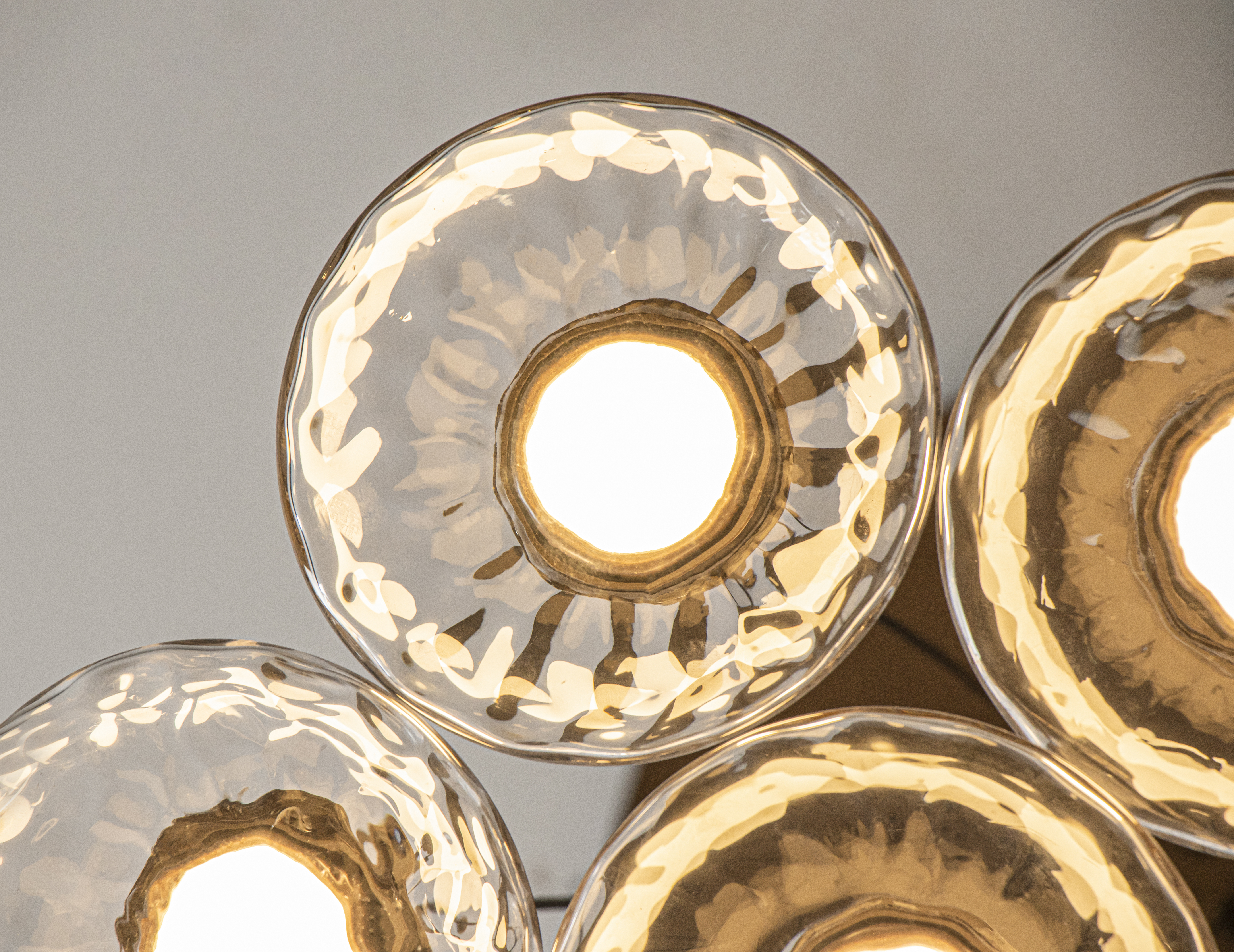
Textured finishes such as ribbed, water ripple and frosted etching are evolving beyond mere light control functions to become an integral part of spatial design. Vertical ribbed glass diffuses light into soft linear gradients, delivering architectural texture even when the fixture is unlit, making it a top pairing for mainstream interior styles including modern minimalism, wabi-sabi and French luxury aesthetics.
This type of product works particularly well in restaurants, reception areas and foyers. Light and shadow create varied layers as natural and artificial light alternate throughout the day. When paired with 2700K warm white LED sources, it balances a premium look with spatial comfort.
2. Organic & Biomorphic Forms: Aesthetic Shift Driven by Biophilic Design
Influenced by the biophilic design trend, glass lighting silhouettes are shifting from regular geometric shapes to soft, organic natural forms. Pebble-shaped pendants, droplet cluster fixtures and branch-style statement pieces soften the starkness of built environments and infuse a natural, relaxed atmosphere.
When finished with frosted or satin glass processes, the fixtures emit a diffused glow that mimics natural daylight filtering through foliage. Widely applied in spa settings, luxury residential lobbies and wellness spaces, this category is the fastest-growing styling segment in 2026.
3. Sustainable Manufacturing: Eco-Credentials Become a High-End Project Entry Threshold
Sustainability is no longer a bonus point, but a mandatory entry standard for international high-end projects. Leading glass lighting manufacturers are upgrading their production processes one after another, adopting high-content recycled glass, low-energy melting furnaces and eco-friendly packaging. Data shows that production using 100% recycled glass reduces carbon emissions by 74% without compromising optical clarity.
For international hotel brands and global chain commercial spaces, eco-friendly manufacturing credentials and product safety certifications have become prerequisites for vendor qualification, and also a core competitive advantage for original manufacturers expanding into overseas markets.
Evaluating Custom Glass Lighting Quality: 4 Dimensions to Judge Craftsmanship Level
The price difference in high-end custom glass lighting often lies in the detail craftsmanship. Average buyers tend to only look at the exterior shape, overlooking glass quality, structural safety and durability. From an original manufacturer’s perspective, you can judge the craftsmanship level from four core dimensions.
1. Glass Forming Techniques
Hand-blown glass carries subtle air bubbles and thickness variations, making each piece unique. Machine-formed glass offers high precision and consistency. Quality custom fixtures match the technique to the project requirements.
2. Surface Finishing Details
Check whether patterns are uniform, edges are smoothly polished, and color transitions are natural. The more meticulous the treatment, the more premium the fixture feels.
3. Metal Structure & Hardware
Premium products use brass and stainless steel with anti-oxidation treatments. Load-bearing structures are engineered for stress to avoid deformation.
4. Light Source Compatibility
Good glass lighting is paired with appropriate color temperature, CRI, and dimming system compatibility to determine the final lighting effect.
Why High-End Custom Projects Prioritize Direct Partnership with Original Manufacturers
In the high-end custom segment, intermediate traders often struggle to balance craftsmanship precision, lead time and cost control. Directly partnering with original manufacturers with R&D and production capabilities is the choice of a growing number of buyers, with three core advantages.
- • Greater customization flexibility: In-house factories adjust glass material, shape, and finishing rapidly.
- • More controllable quality: The entire process from melting to assembly is completed in-house under strict QC.
- • Better cost efficiency: Cutting out intermediate links results in reasonable pricing and reduced project risk.
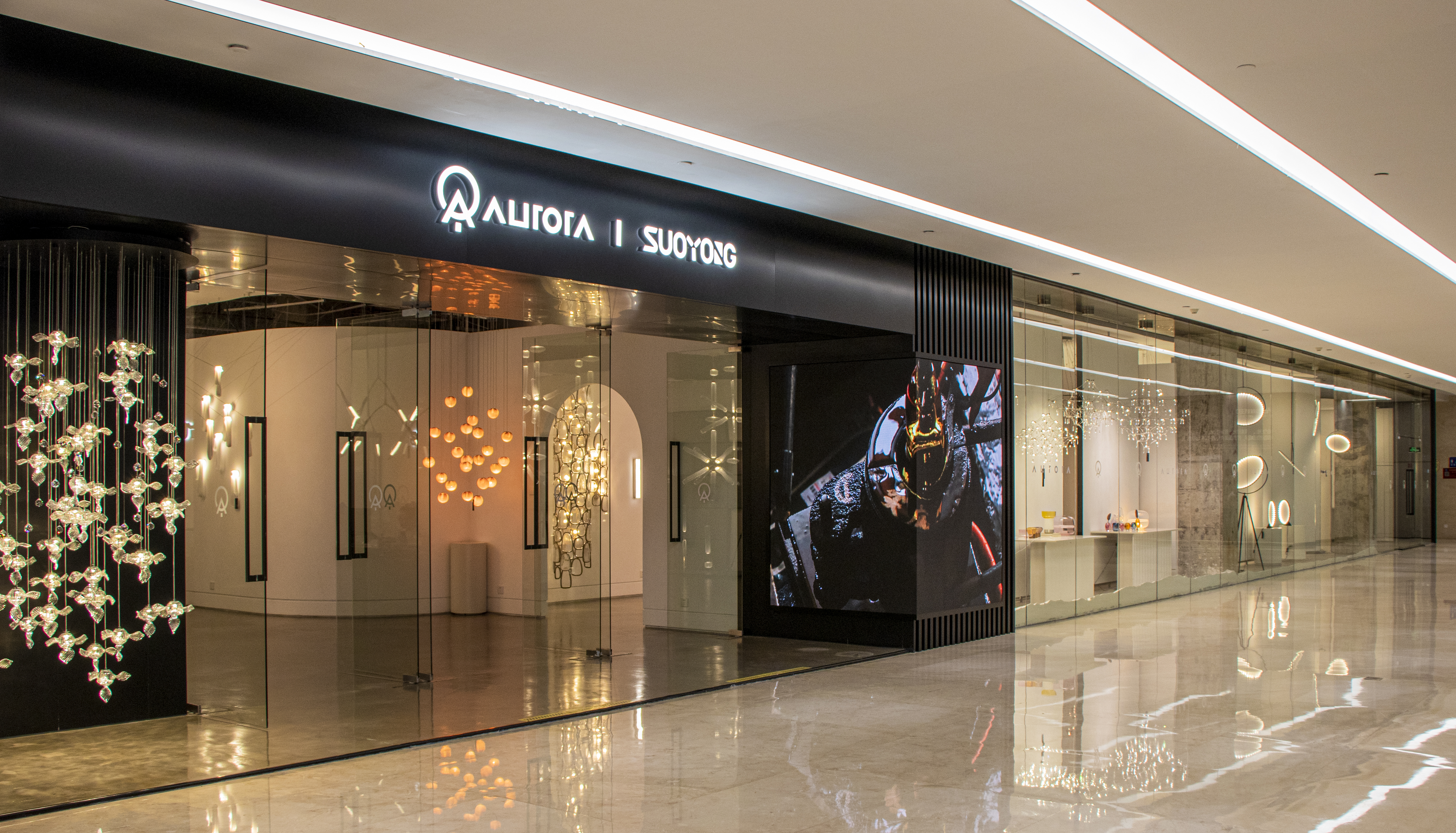
As a premium custom glass lighting original manufacturer with 17 years of expertise, suoyoung Lighting operates complete in-house glass blowing and fabrication production lines. Our products hold multiple international certifications including CE, UL and RoHS. We currently maintain a showroom at Unit 18-21, Zone A, 8th Floor, Star Alliance Lighting Center in Guzhen, Zhongshan.
Common Pitfalls in Custom Glass Lighting Sourcing for 2026
- Don’t just compare quotes by appearance – confirm glass material and thickness. Clarify specifications like borosilicate vs. crystal glass.
- Approve prototypes first before signing bulk production contracts to avoid costly deviations in color and dimensions.
- Confirm certifications and delivery terms upfront for export orders to avoid customs clearance issues.
- Clarify after-sales and replacement services. Confirm shipping damage compensation and lead time for future replacements.
Frequently Asked Questions (FAQ)
Q1: What is the typical lead time for custom glass lighting?
A: Prototyping usually takes 3–7 days and bulk production 2–4 weeks. Complex hand-blown pieces may take 7–15 days for prototypes and 4–6 weeks for production.
Q2: Can hand-blown glass lighting be made completely identical?
A: Hand-blown glass has subtle differences, which is part of its value. For high consistency, machine-formed glass is recommended.
Q3: What project scenarios are best suited for high-end glass lighting?
A: Hotel lobbies, branded restaurants, luxury residential foyers, commercial reception areas, and wellness spaces are ideal scenarios.
Q4: What certifications are required for glass lighting exported to Europe and the US?
A: The EU generally requires CE and RoHS; the US requires UL certification. Professional manufacturers will have these in advance.
Conclusion
In 2026, the custom glass lighting market is shifting from price competition to comprehensive competition of craftsmanship, design and service. For buyers and designers, the prerequisite to choosing the right products is understanding trends and selecting the right supplier.
If you are looking for a reliable premium custom glass lighting original manufacturer, you are welcome to visit suoyoung Lighting’s showroom at Unit 18-21, Zone A, 8th Floor, Star Alliance Lighting Center, Guzhen, Zhongshan. You can view samples and discuss project requirements in person.
Post time: Oct-07-2026